
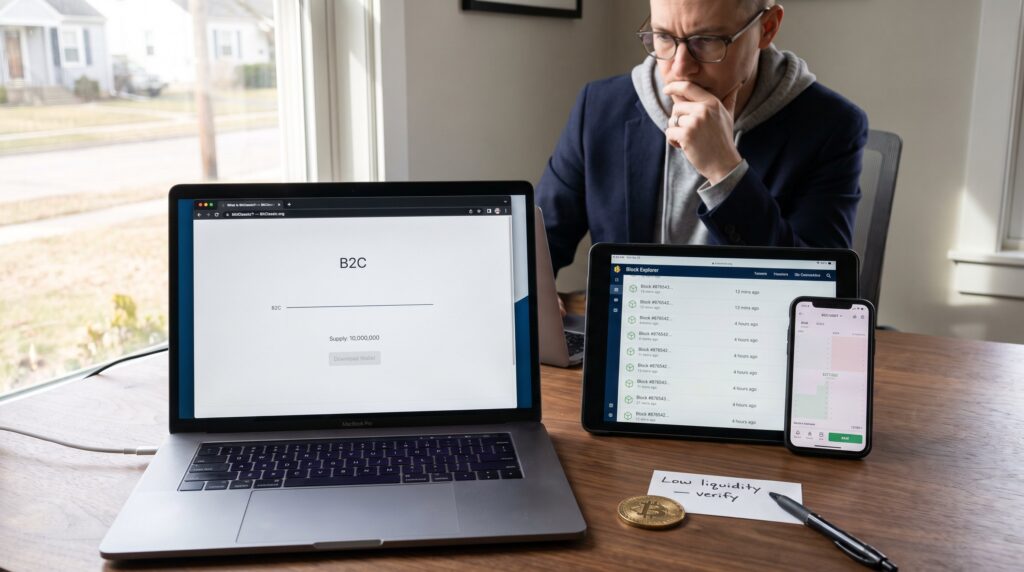
BitClassic is both a small cryptocurrency (B2C) and a content site focused on blockchain, NFTs, and trading. This practical guide explains what BitClassic does, who uses it, and how readers can rely on bitclassic.org as a starting point for research. The overview highlights the coin’s origins, the site’s main content types, and quick safety boundaries every researcher should know before trusting low‑liquidity tokens.
Table of Contents
ToggleKey Takeaways
- BitClassic is both a niche cryptocurrency (B2C) and a content platform offering blockchain, NFT, and trading information curated for learners, traders, and researchers.
- BitClassic (B2C) began as a Bitcoin fork with a hybrid Proof of Work/Proof of Stake design, attracting miners and hobbyist stakers, but currently has very low liquidity and limited development activity.
- Bitclassic.org organizes content into clear categories: explainers, token summaries, trading guides, and NFT coverage, providing practical and educational resources for niche crypto topics.
- Users should use Bitclassic.org as a research starting point to identify lesser-known tokens and concepts while always confirming market data and liquidity through independent trackers before trading.
- A recommended research workflow includes searching, reading project pages, cross-checking claims with external sources, and bookmarking relevant content for quick future reference.
- Bitclassic.org updates content regularly with timestamps and links to primary sources, but it functions purely as an informational hub, not a regulated trading platform or financial advisor.
What BitClassic Is And Who It’s For
BitClassic is a dual entity: a niche cryptocurrency (often called B2C) and a content platform at bitclassic.org that publishes blockchain news and guides. The quick fact: BitClassic (B2C) began as a Bitcoin fork around 2018, using a hybrid Proof of Work / Proof of Stake design and the Scrypt algorithm for peer‑to‑peer transfers. That technical profile explains why miners and hobbyist stakers once favored it.
Who uses it? The site and coin attract three clear groups: traders hunting obscure, low‑cap tokens: learners wanting historical context on Bitcoin forks: and researchers cataloging niche projects and NFT trends. For example, an independent trader might scan Bitclassic.org for token listings before cross‑checking market depth elsewhere. Bitclassic.org also hosts explainers and how‑tos that match readers who prefer stepwise learning and concrete examples.
Practical warning: the B2C coin shows very low liquidity and limited development activity. Treat any price or volume figures as provisional and validate them with independent trackers before acting. The platform functions best as a research springboard rather than a primary trading venue.
Core Content Categories On BitClassic
Key insight first: bitclassic.org organizes content into explainers, project summaries, trading insights, and NFT coverage, each meant to answer a distinct reader need.
-
Blockchain and cryptocurrency explainers: These posts break down fundamentals such as consensus models and token mechanics. Readers will find comparisons like proof types and algorithm choices framed with specific examples and numbers. The site’s piece on core concepts links to broader primer material for investors and students.
-
Token and project summaries: Bitclassic lists basic token data, names, short descriptions, and links to external charts and communities. That data helps researchers catalog obscure coins and remember precise launch dates or supply figures.
-
Trading and NFT content: Practical trading guides and NFT spotlights provide tactics, typical fee ranges, and screenshots of marketplace listings. These pieces target active traders and collectors who need quick, actionable insights rather than long theory.
To explore the site’s foundational overview and its approach to digital currency, see the detailed bitclassic page that frames the project as a comprehensive resource for niche tokens and guides. The page also situates BitClassic among other crypto information hubs and explains editorial focus.
How To Use BitClassic Effectively For Research And Trading
Immediate advice: use Bitclassic.org as a scanning and learning tool, not as a sole source for trade execution. The site helps identify lesser‑known coins, historical forks, and NFT drops quickly. A practical workflow saves time and reduces risk.
First, scan the site’s listings and feature posts to identify candidates and timelines. Then pull price snapshots and liquidity metrics from independent trackers to confirm market depth. Because BitClassic (B2C) has low activity, traders should avoid large position sizes and expect slippage.
Next, use the site’s educational posts to fill knowledge gaps, for instance, the blockchain vs. cryptocurrency explainer clarifies how network rules affect token scarcity and transfer costs. That background helps traders estimate likely volatility and fee impacts before placing orders.
Finally, bookmark high‑value pages and curate sources externally. Bitclassic.org is helpful for discovery and context, but every trade plan must rely on primary market data and exchange order books.
Step-By-Step: Finding, Verifying, And Bookmarking Useful Articles
Direct answer: follow four simple steps, search, open, cross‑check, and bookmark, to turn Bitclassic content into reliable research snippets.
-
Search: Use the site’s internal search for the token, NFT project, or trading topic. Narrow by date to avoid stale information.
-
Open project pages: Read the token summary and follow the article’s embedded links to external charts, whitepapers, or community channels. These outbound links often point to primary sources or forums that record developer activity.
-
Cross‑check: Compare claims about supply, launch date, or development status with outside sources. For basic crypto mechanics and the main risks behind tokens, trusted primers give a clearer baseline for comparison. When a claim concerns fundamentals, verifying it through an authoritative explainer reduces mistakes.
-
Bookmark and tag: Save articles in a browser folder labeled by topic (e.g., “B2C tokens” or “NFT drops 2026”). Add a one‑line note on why the page mattered, price snapshot, research lead, or community link, so future retrieval is fast.
Common pitfall: relying on a single page for liquidity or developer activity. BitClassic content sometimes summarizes projects that have become inactive. A short cross‑check prevents costly misreads.
Assessing Credibility, Sources, And Update Frequency
Direct finding: check dates, source links, and whether external references point to active developer channels to judge trustworthiness. Bitclassic.org displays timestamps and often updates pieces through 2025–2026, which helps readers trace when material was last vetted.
Steps to assess credibility:
-
Date checks: Confirm the article’s publish or last‑updated date. Fresh updates in 2025–2026 imply recent attention: older posts may reflect abandoned projects.
-
Source links: Reliable articles link to primary evidence, whitepapers, GitHub commits, or community channels. If an article only cites secondary summaries, treat claims cautiously.
-
Market verification: For price and volume claims about BitClassic (B2C), consult independent exchanges and aggregators to confirm liquidity levels and trade history.
-
Editorial role: Remember that bitclassic.org is an informational hub, not a regulated financial service. It curates and explains: it does not provide custody, regulated trading, or audited financial products.
To read a focused explanation of the site’s mission and updates in 2026, the site’s overview page provides context on editorial scope and content cadence. That page clarifies the difference between news, evergreen guides, and archived project summaries.
Conclusion
Key takeaway: BitClassic functions mainly as a research and content hub while its B2C coin remains a largely inactive, low‑liquidity token. Readers should use bitclassic.org to discover projects and learn concepts, then verify market data and development activity through independent trackers and primary documents. With cautious cross‑checking, the site is a practical starting point for researchers and traders interested in niche crypto history and current trends.